


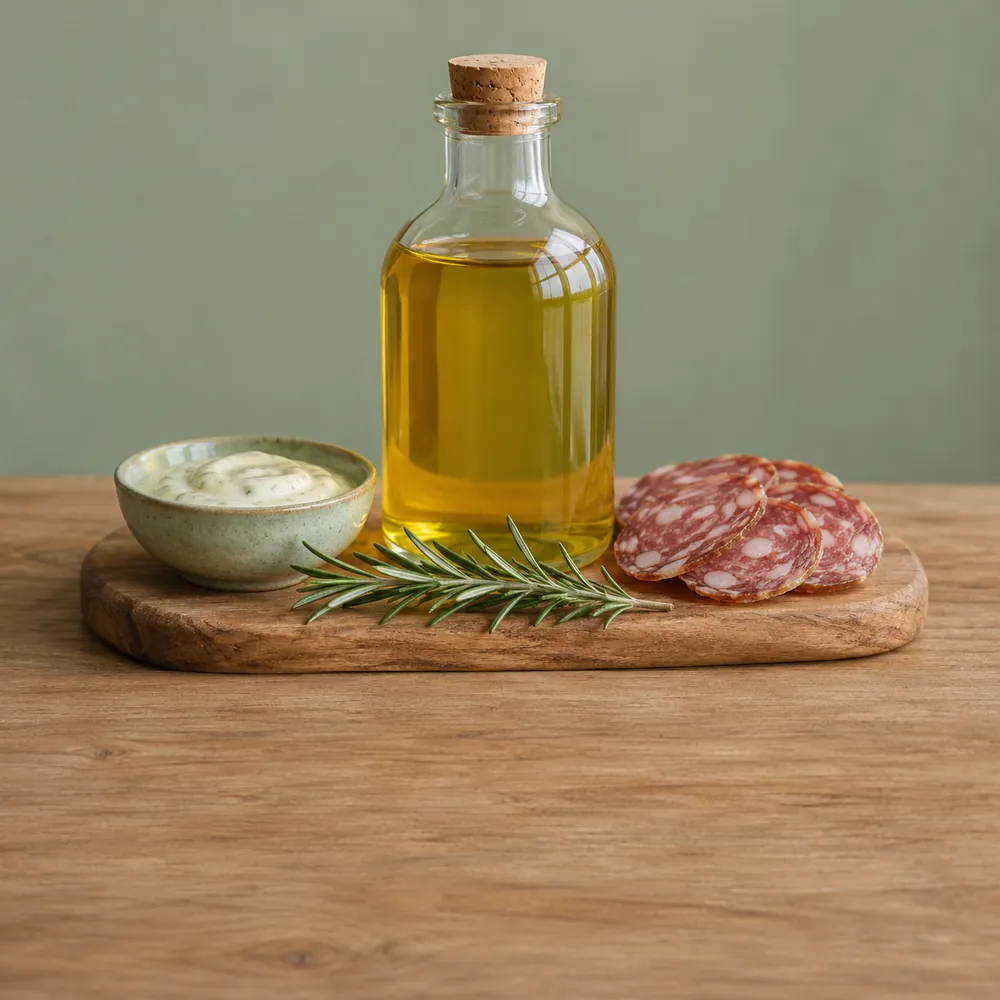
Food antioxidant
Antioxidant E 392 for fats, oils and fat-containing foods such as meat products, sauces, dressings and snacks, helping to delay oxidation.
Spanish rosemary, a natural antioxidant.
Rosemary leaf extract standardised to more than 15% carnosic acid (HPLC), a natural antioxidant (E 392) for food, supplements and cosmetics.
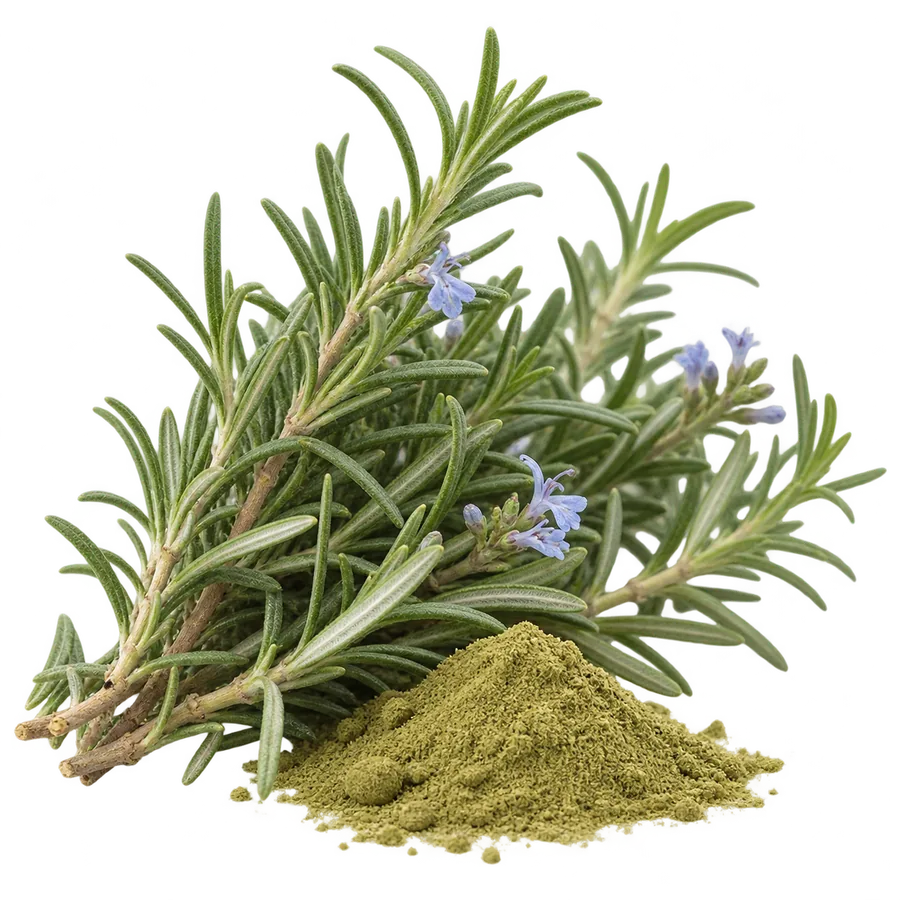 15%Carnosic acid · HPLC
✓Grown & made in Spain
Rosemary protects fats and oils mainly through carnosic acid, a phenolic diterpene that oxidises in preference to the lipids around it and turns into carnosol and related compounds. This is the basis of its use as food antioxidant E 392, which is specified by its carnosic acid and carnosol content.
A powder that disperses in vegetable oil, so it protects the fat phase directly. For aqueous and hydroalcoholic systems, choose a grade standardised to rosmarinic acid (more than 6% by HPLC) or to hydroxycinnamic acids (more than 10% by UV). Other specifications can be developed on request, with application support from the first trial to full production.
Request the technical data sheetRosmaguard extracts are supplied as ingredients for food, dietary supplements and cosmetics. These are the uses they are most often chosen for.
Antioxidant E 392 for fats, oils and fat-containing foods such as meat products, sauces, dressings and snacks, helping to delay oxidation.
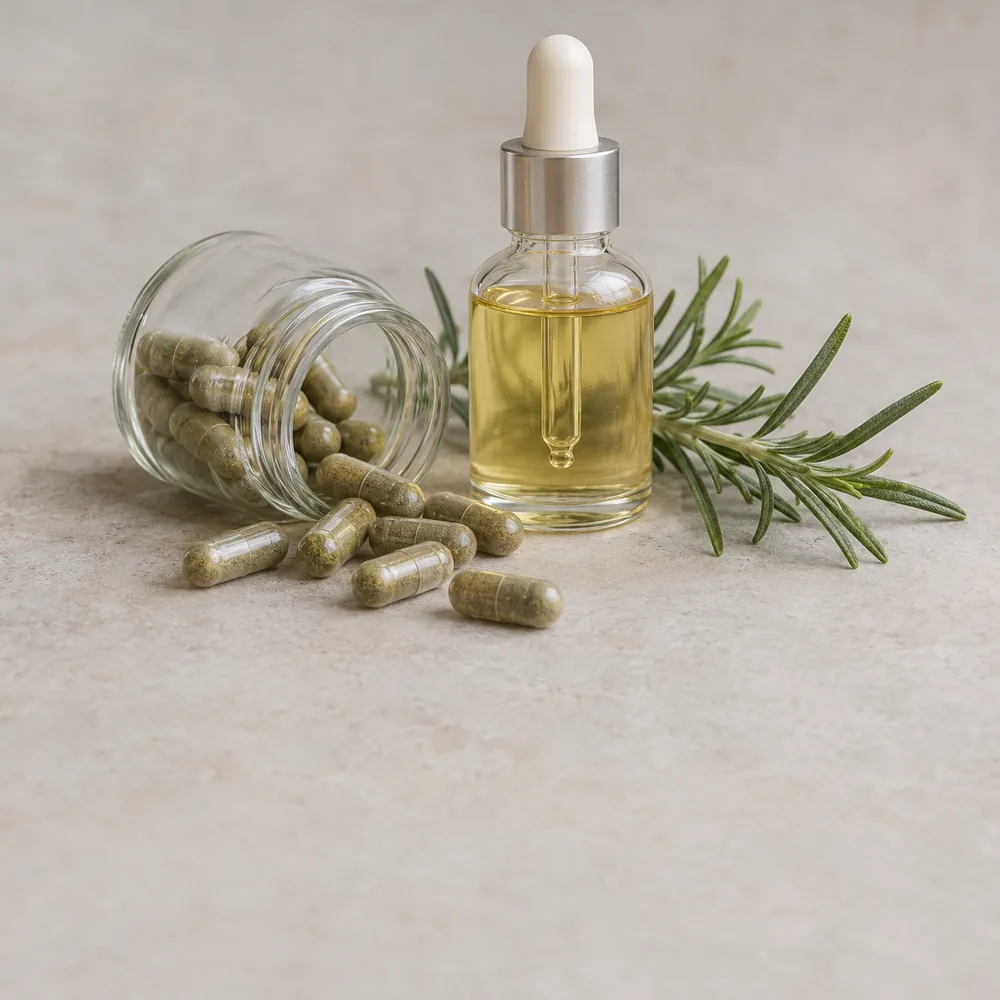
Antioxidant-category capsules and powder blends using rosemary as a source of polyphenols, and cosmetic oils and emulsions where the oil phase needs protection.
Each Rosmaguard grade is standardised to a defined marker: carnosic acid for the oil-dispersible grade, rosmarinic or hydroxycinnamic acids for the water-dispersible grades.
Typically the main antioxidant compound of rosemary leaf and the marker of the reference grade.
Formed from carnosic acid and typically present alongside it in fat-soluble rosemary extracts.
A water-soluble caffeic acid ester typically present in rosemary, the marker of the water-dispersible grades.
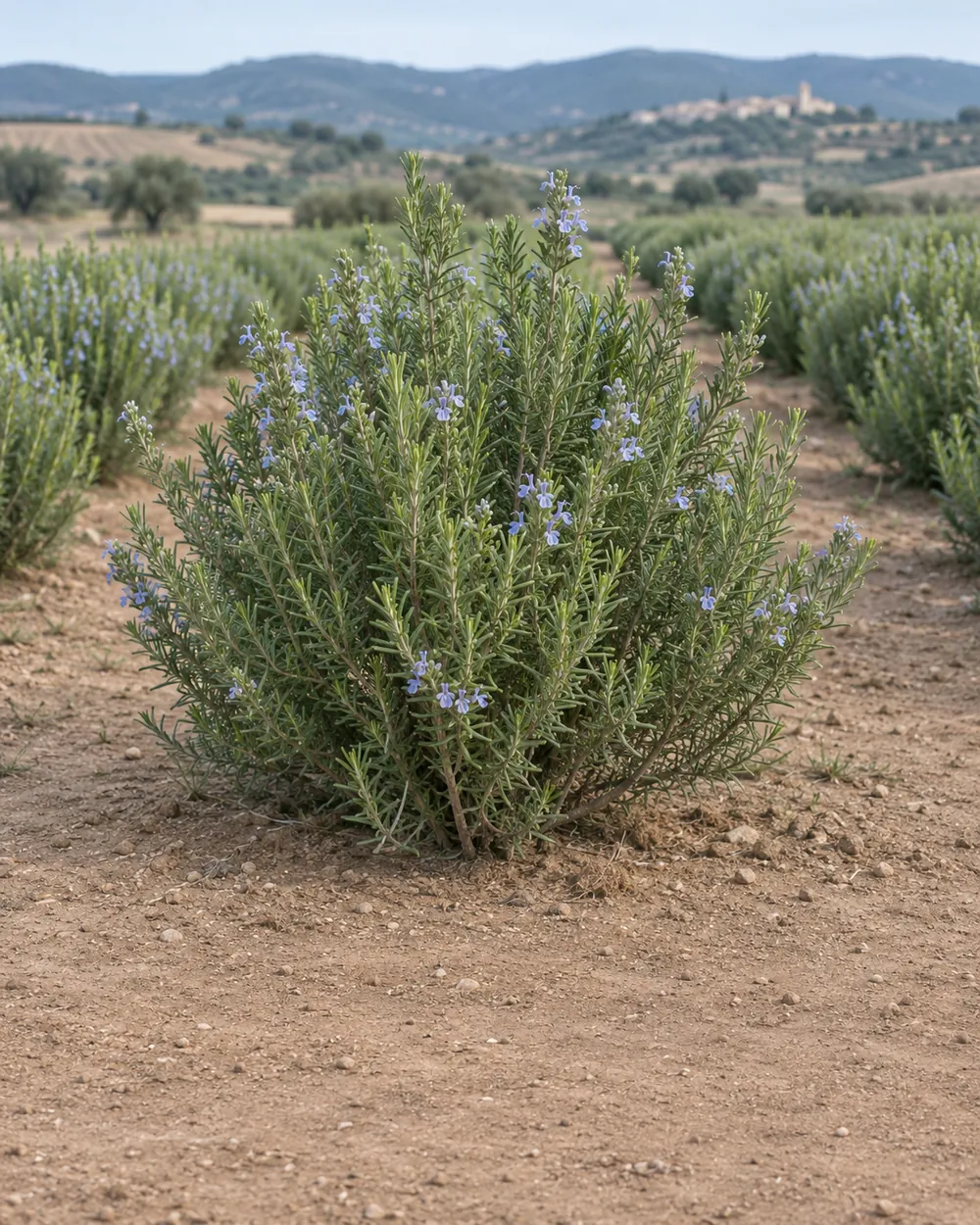
The rosemary is cultivated and harvested in Spain, and extraction, concentration and packing are all carried out in Spain. Every batch is tested before release, so the extract you receive matches the specification you approved.
Tell us your application and target specification, and we will send samples, the technical data sheet and any regulatory documentation your team needs.
Rosmaguard is Nutexa's family of rosemary leaf extracts from Rosmarinus officinalis grown and processed in Spain. The reference grade is standardised to more than 15% carnosic acid by HPLC and is used as a natural antioxidant (E 392) in food, and in dietary supplements and cosmetics.
Rosmaguard covers three main grades: a fat-soluble extract with more than 15% carnosic acid (HPLC); an extract with more than 6% rosmarinic acid (HPLC); and an extract with more than 10% hydroxycinnamic acids expressed as rosmarinic acid (UV). Other specifications can be developed on request.
The carnosic acid grade is hydrophobic: insoluble in water, dispersible in vegetable oil. The rosmarinic acid grades are suited to aqueous and hydroalcoholic systems.
Yes. Rosemary extract for food is classified as antioxidant E 392. Use levels and conditions depend on the food category.
We send the technical data sheet, allergen, vegan, solvent and origin statements on request, and a certificate of analysis with every batch. Requests for samples or documentation are answered within 24–48 hours on working days.
Samples, technical data and formulation support, straight from our team in Spain.