


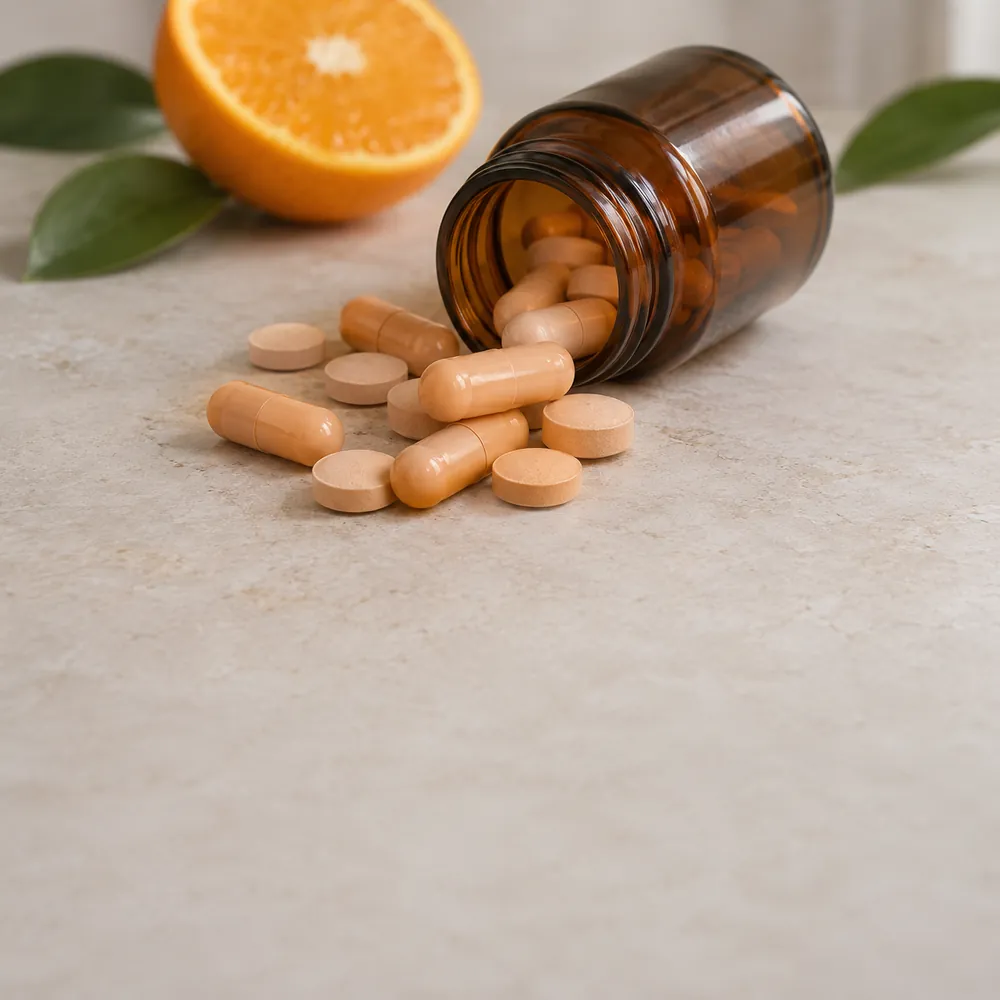
Dietary supplements
Circulation and vein-category formulas in capsules and tablets, where hesperidin is a classic ingredient, often combined with diosmin or vitamin C.
Sweet and bitter orange flavonoids, standardised by HPLC.
Orange extracts standardised by HPLC: sweet orange bioflavonoids with at least 50% total flavonoids as hesperidin, and bitter orange grades rich in naringin. For dietary supplement, food, feed and cosmetic formulations.
 50%Flavonoids as hesperidin · HPLC
✓Sweet & bitter orange
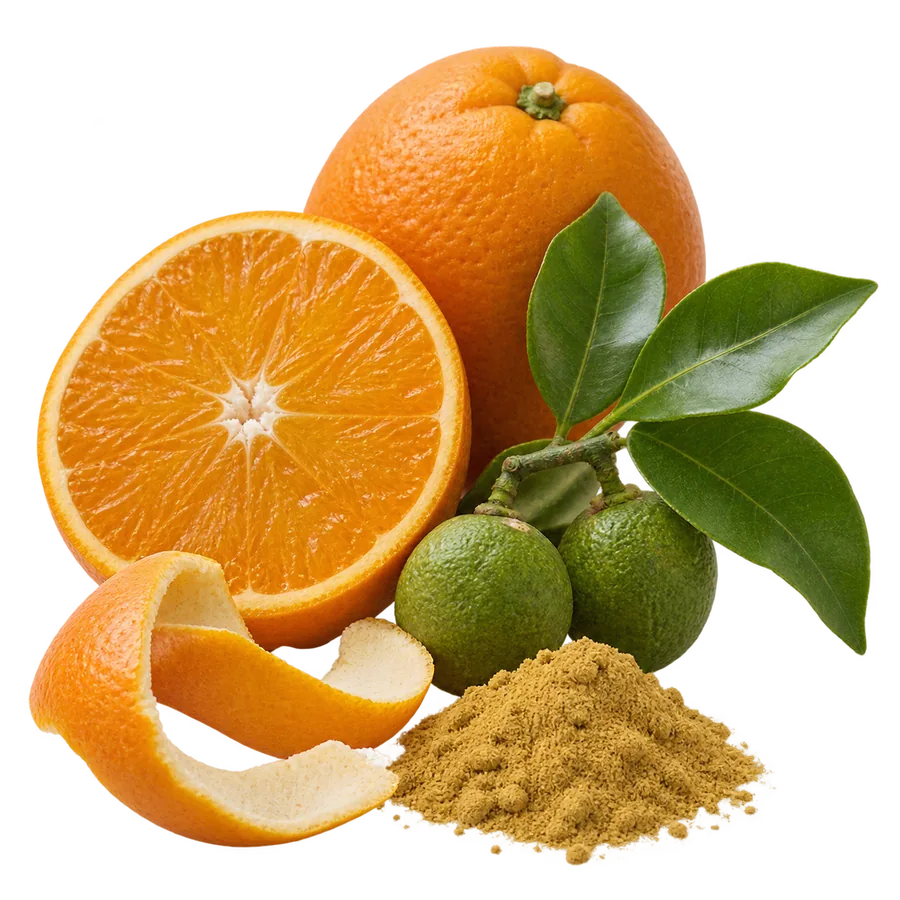
Citrus flavonoids are mostly flavanone glycosides concentrated in the peel. Sweet and bitter oranges differ in the sugar attached to them: sweet orange carries rutinosides such as hesperidin, which are tasteless, while bitter orange carries neohesperidosides such as naringin and neohesperidin, which taste bitter.
The reference grade is a yellow-brown powder that works in capsules, tablets and powder blends. For bitter orange, choose an immature-fruit extract with more than 45% total flavonoids as naringin, or a water-soluble dried-fruit extract with defined naringin and neohesperidin. Other specifications can be developed on request, with application support from the first trial to full production.
Request the technical data sheetOrangcitric extracts are supplied as intermediate ingredients. The sweet orange grade is intended for dietary supplements; the bitter orange grades are also used in food, feed and cosmetics.
Circulation and vein-category formulas in capsules and tablets, where hesperidin is a classic ingredient, often combined with diosmin or vitamin C.
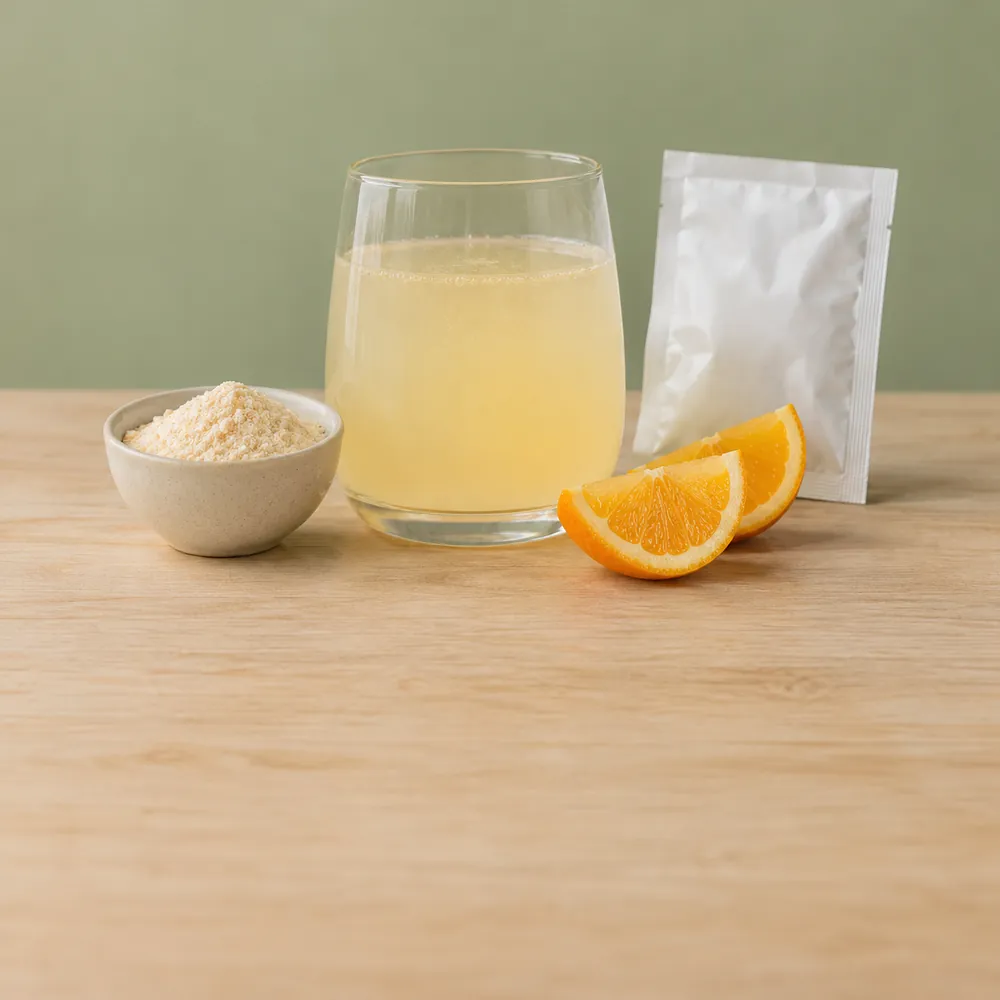
Powdered drinks and food formulations, where the water-soluble bitter orange grade dissolves readily in aqueous systems.
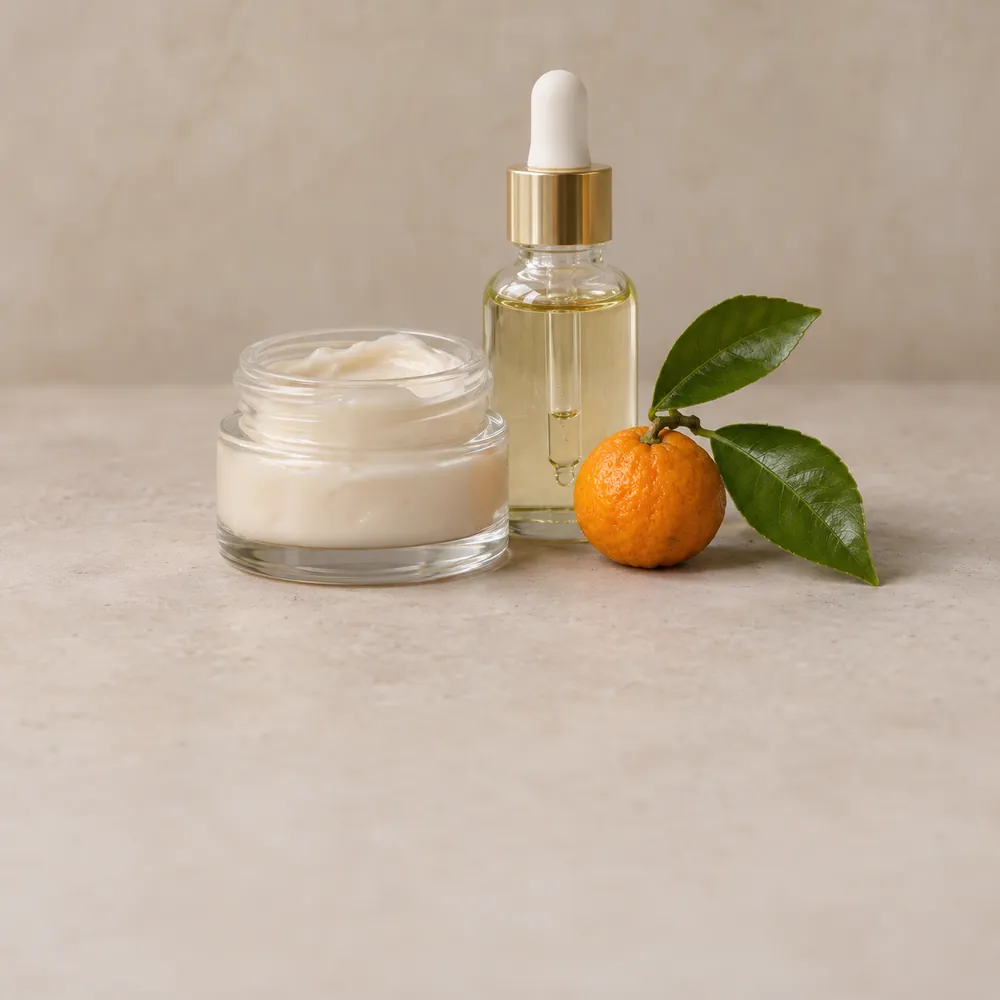
Bitter orange grades are documented for cosmetic products and, as a feed flavouring, for farm animals. They are not for pet food.
Every Orangcitric grade is standardised to total flavonoids by HPLC, to verify consistency from batch to batch.
Typically the main flavonoid of sweet orange peel and the reference for total flavonoids in the sweet orange grade.
Typically the main flavanones of bitter orange. The water-soluble grade specifies more than 20% naringin and more than 10% neohesperidin.
Orange peel typically also contains flavones such as nobiletin and tangeretin, completing its flavonoid profile.
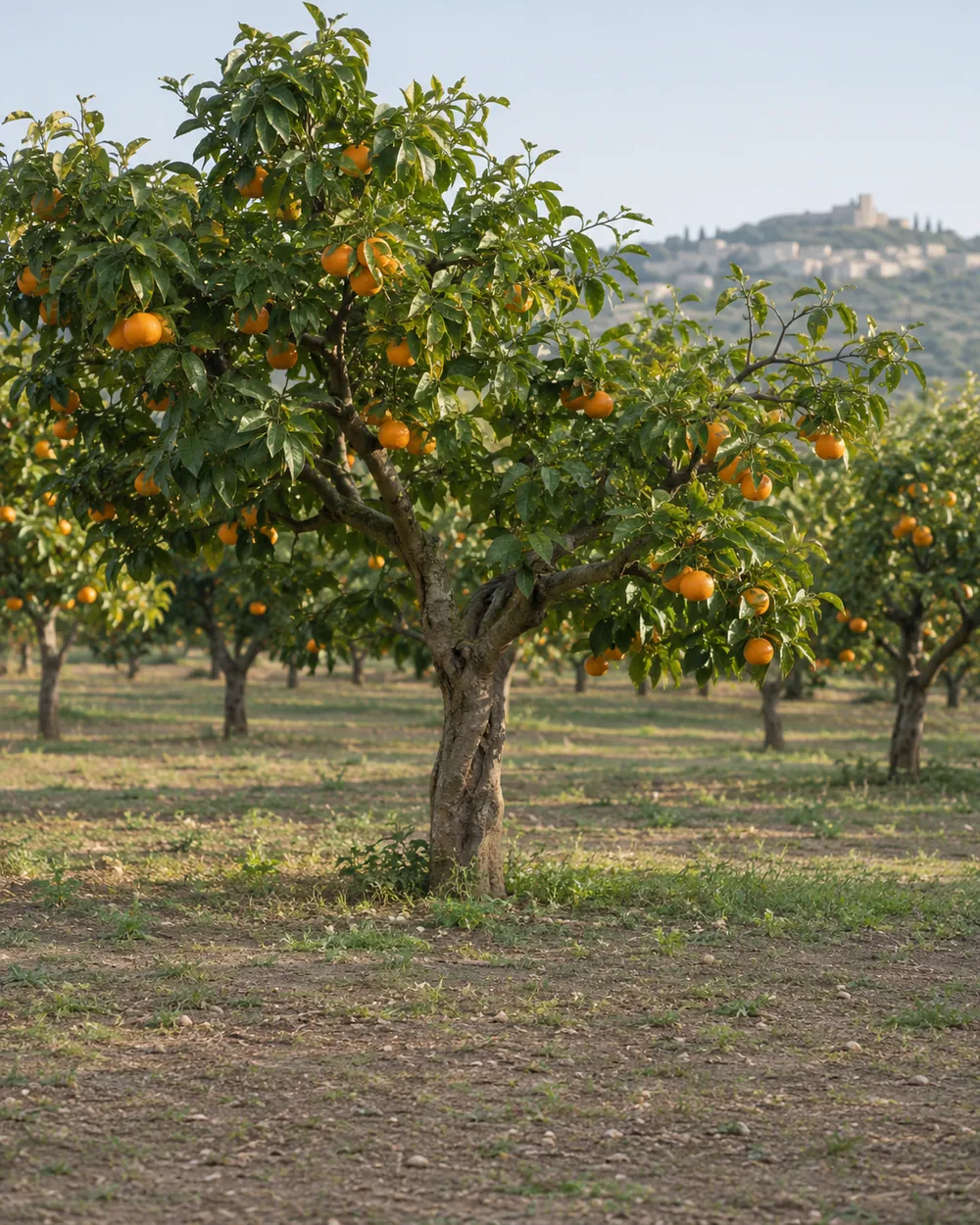
The sweet orange raw material for the reference grade comes from Spain, where it grows with more than 2,700 hours of sunshine a year. Every batch is tested before release, so the extract you receive matches the specification you approved.
Tell us your application and target specification, and we will send samples, the technical data sheet and any regulatory documentation your team needs.
Orangcitric is Nutexa's family of orange extracts. The reference grade is a sweet orange (Citrus × sinensis) bioflavonoid extract standardised to at least 50% total flavonoids as hesperidin by HPLC, supplied as a powder for dietary supplement formulations.
Orangcitric covers sweet and bitter orange. Besides the sweet orange grade with at least 50% total flavonoids as hesperidin, we offer a bitter orange (Citrus aurantium) extract from whole immature fruit with more than 45% total flavonoids as naringin, and a water-soluble bitter orange extract with more than 45% total flavonoids, over 20% naringin and over 10% neohesperidin. New specifications can be developed on request.
Sweet orange extracts are typically rich in hesperidin, while bitter orange extracts are typically rich in naringin and neohesperidin. The sweet orange grade is insoluble in water; the bitter orange grades are partially soluble or soluble in water, depending on the grade.
We send the technical data sheet, allergen and regulatory statements on request, and a certificate of analysis with every batch. Requests for samples or documentation are answered within 24–48 hours on working days.
Samples, technical data and formulation support, straight from our team in Spain.