


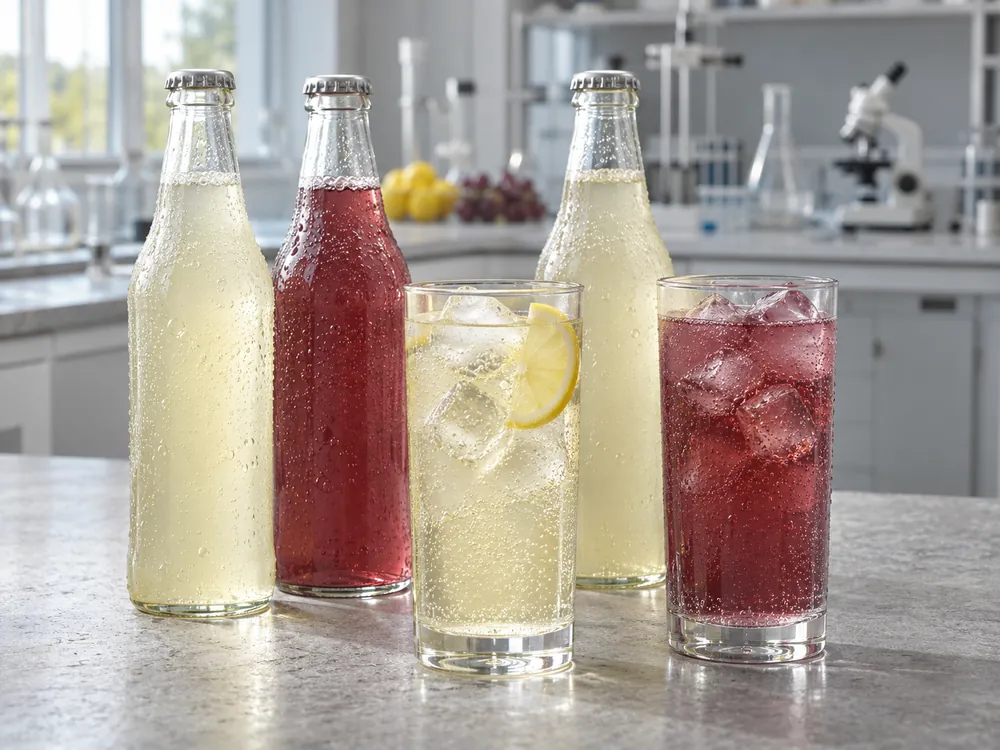
Beverages
Adjusts acidity and flavour balance in soft drinks, fruit-based drinks and functional beverages.
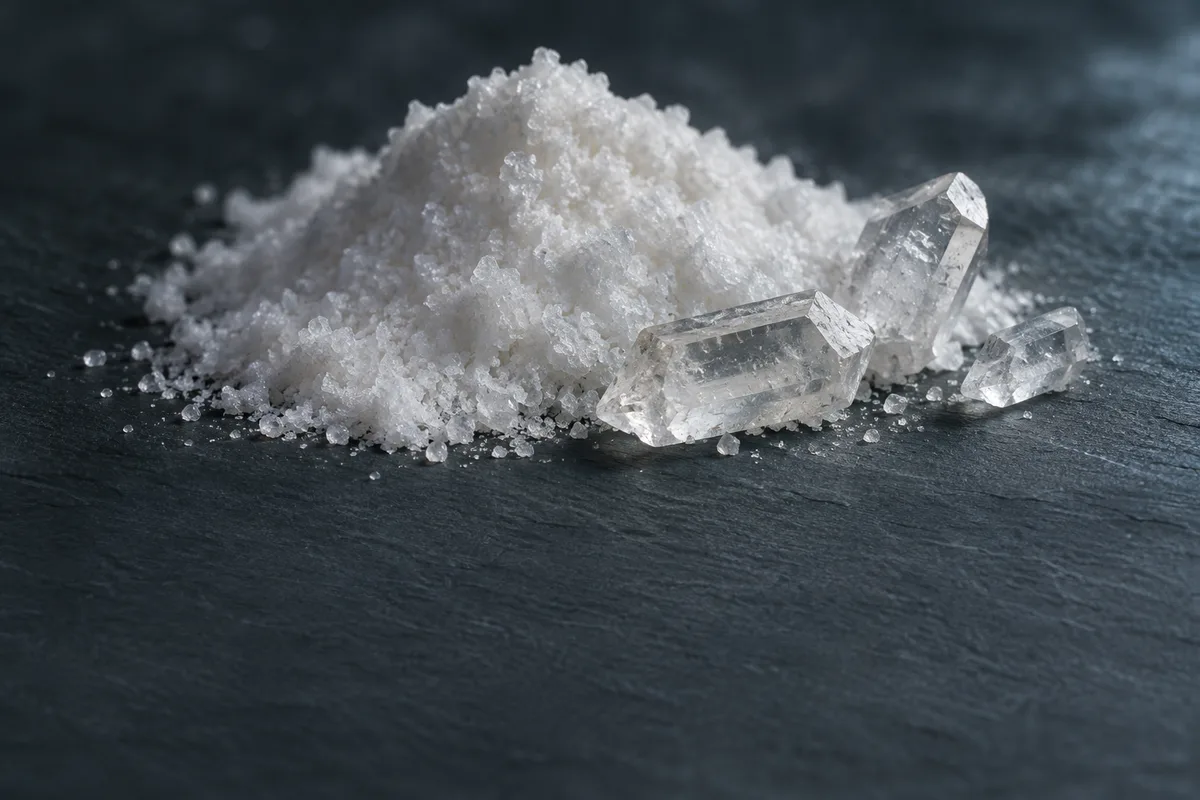
Natural L(+)-tartaric acid from grapes, for food and beverage formulations.
A high-purity organic acid obtained from wine industry by-products in Spain and refined by controlled crystallisation, for acidity, pH control and flavour balance.
 99.7%Minimum assay · FCC
✓From grapes, Spain
Tartaric acid is the main organic acid of grapes. In winemaking it settles out with the lees and as tartar crystals, and these grape-derived by-products are the raw material for natural L(+)-tartaric acid, the same isomer found in the fruit. It has a clean, sharp acidity and is very soluble in water.
Used across the food and beverage industry to balance acidity, regulate pH and enhance flavour perception, and as the acid component of leavening systems. Supplied as crystals or powder in several particle sizes, with formulation support from the first trial to full production.
Request the technical data sheetNatural tartaric acid is used wherever a product needs precise acidity, a clean sour note or a reliable acid for leavening.
Adjusts acidity and flavour balance in soft drinks, fruit-based drinks and functional beverages.
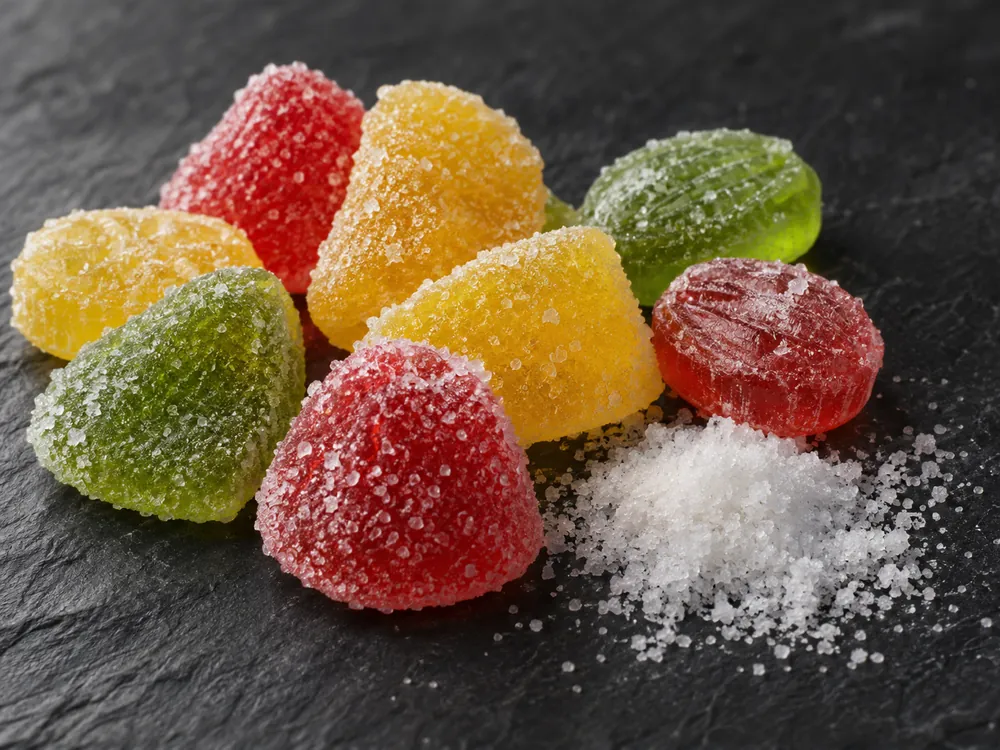
Brings pleasant sour notes and controlled acidity to sweets and confectionery, supporting a stable taste profile.
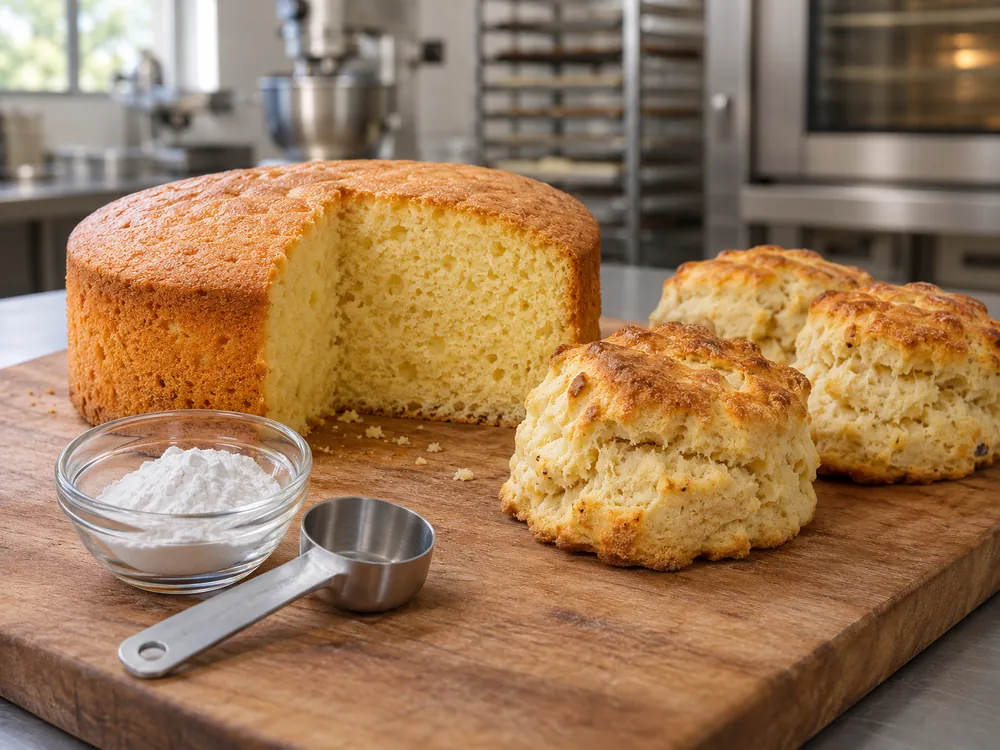
The acid component of leavening systems: combined with bicarbonate in baking powders and bakery mixes to regulate gas release.
Every batch is tested against food additive and pharmacopoeia specifications before release.
The form that occurs in grapes, with a specific optical rotation of +12.0° to +12.8°.
Measured in a 1% water solution: a strong, clean acidity at low dosage.
Solubility in water at 20 °C, so it dissolves quickly in liquid and dry systems.

Natural tartaric acid is obtained in Spain from grape and wine by-products, then purified through controlled crystallisation, dried and screened to the required particle size. It meets the FCC, Ph. Eur. and USP specifications, and every batch is tested before release.
Tell us your application and target specification, and we will send samples, the technical data sheet and any regulatory documentation your team needs.
It is L(+)-tartaric acid obtained from grape and wine by-products, the same form of the acid that occurs in grapes. It is authorised as food additive E 334.
Crystals and powder, in several particle sizes from ground powder to coarse granular. Tell us your application and we will recommend the most suitable grade.
In Spain, from grape and wine by-products of Spanish winemaking.
25 kg paper sacks with an inner polyethylene bag, and 1,000 kg big bags.
We send the technical data sheet and regulatory statements on request, and a certificate of analysis with every batch. Requests for samples or documentation are answered within 24–48 hours on working days.
Samples, technical data and formulation support, straight from our team in Spain.